The Extended Clavicular Stack
Beyond the three core compounds (Retatrutide, BPC-157, GHK-CU), the Clavicular Stack's advanced protocol adds two further peptides targeting deeper tissue recovery and enhanced skin remodeling:
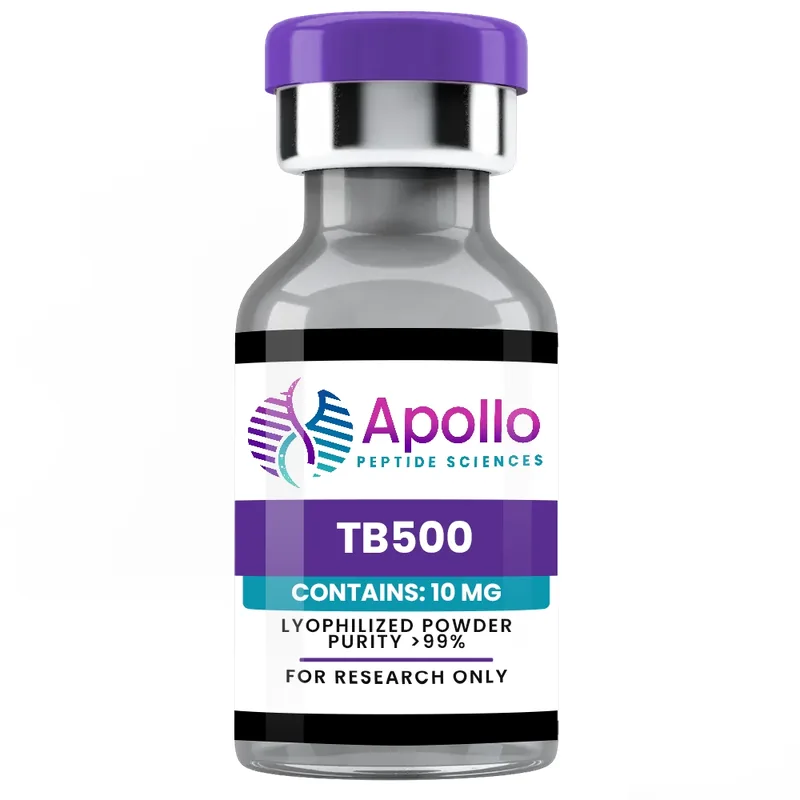
- TB-500 (Thymosin Beta-4): Deep connective tissue and systemic recovery
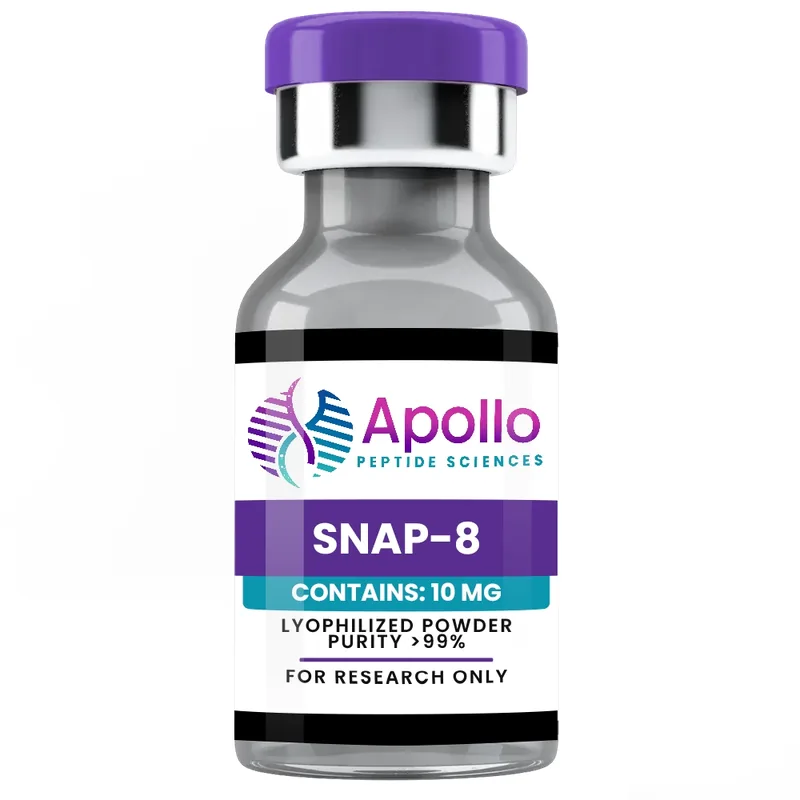
- SNAP-8: Advanced anti-expression wrinkle peptide (the KLOW compound)
TB-500 (Thymosin Beta-4)
What Is TB-500?
Thymosin Beta-4 (TB4) is a 43-amino acid protein involved in the regulation of actin, cell migration, angiogenesis, and inflammation modulation. TB-500 is the synthetic research analog of the active region of TB4.Molecular Profile
- Full name: Thymosin Beta-4 (or its synthetic fragment)
- Molecular weight: ~4,963 Da (full TB4)
- Primary role: Actin sequestration — TB4 sequesters G-actin monomers, preventing premature polymerization and enabling controlled cell migration
- Secondary effects: Anti-inflammatory, angiogenic, cardioprotective in preclinical models
Key Mechanisms
Actin Regulation: TB4 binds and sequesters G-actin (monomeric actin), maintaining the pool of actin available for controlled polymerization during wound healing and tissue repair. This is fundamental to cell migration and tissue remodeling.
Angiogenesis: TB4 promotes new blood vessel formation — critical for bringing nutrients to healing tissue. Works synergistically with BPC-157's VEGF upregulation.
Anti-Inflammatory: Reduces pro-inflammatory cytokine production (TNF-alpha, IL-6) in tissue injury models, creating a favorable healing environment.
The Wolverine Protocol: TB-500 is often combined with BPC-157 in what researchers call the Wolverine stack — combining TB4's systemic actin/anti-inflammatory effects with BPC-157's local cytoprotection and angiogenesis for comprehensive tissue repair.
Research Dosing Reference
- Reconstitution: Add 2mL BAC water to 10mg vial → 5mg/mL
- Published preclinical: 0.1-1mg/kg in rodent models
- Route: Subcutaneous in most preclinical studies
SNAP-8 (The KLOW Peptide)
What Is SNAP-8?
SNAP-8 (acetyl octapeptide-3) is a synthetic 8-amino acid peptide analog of the N-terminal fragment of SNAP-25 — a key protein in the SNARE complex responsible for neurotransmitter vesicle fusion at the neuromuscular junction.Mechanism: Acetylcholine Release Modulation
SNAP-8 competes with SNAP-25 for binding in the SNARE protein complex, partially inhibiting neurotransmitter vesicle fusion. This reduces acetylcholine release at neuromuscular junctions in facial muscles — resulting in a temporary reduction in facial muscle contraction force. The research outcome: reduced deepening of expression lines from repeated muscular action.It is studied as a research analog to botulinum toxin compounds, sharing a related (though far weaker and mechanistically distinct) general effect on ACh signaling at the NMJ.
KLOW in the Clavicular Protocol
The KLOW designation in Clavicular's stack pairs SNAP-8 with GHK-CU's collagen remodeling. While GHK-CU (GLOW) addresses collagen quality and skin structure, SNAP-8 (KLOW) addresses the muscular component of skin aging — expression lines and dynamic wrinkles.Research Dosing Reference
- Reconstitution: Add 5mL BAC water to 5mg vial → 1mg/mL
- Studied concentrations: 0.1-1% in topical preparations
- Also studied: subQ administration in preclinical wrinkle models
Combined Use in Research
The extended stack research rationale:
- Retatrutide: Fat loss (GLP-1/GIP/Glucagon triple-agonism)
- BPC-157: GI protection + local tissue repair
- GHK-CU (GLOW): Collagen remodeling + skin structure
- TB-500: Systemic deep tissue recovery + anti-inflammatory
- SNAP-8 (KLOW): Expression wrinkle reduction via ACh modulation
TB-500 and SNAP-8 available from Clavicular Stack. For laboratory research use only.