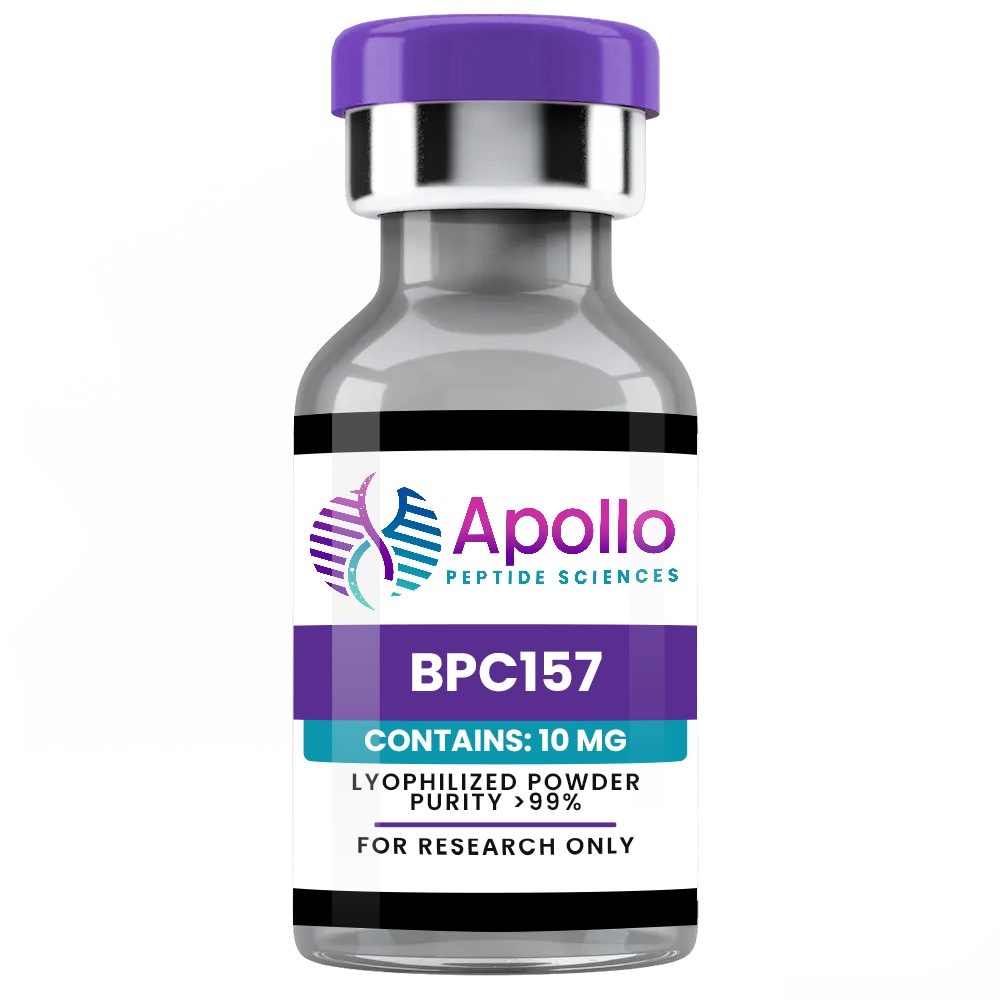
What Is BPC-157?
BPC-157 (Body Protection Compound-157) is a synthetic pentadecapeptide derived from a naturally occurring protein sequence found in human gastric juice. The 15-amino acid sequence (Gly-Glu-Pro-Pro-Pro-Gly-Lys-Pro-Ala-Asp-Asp-Ala-Gly-Leu-Val) has been extensively studied in preclinical models for gastroprotective, wound-healing, and angiogenic properties.
Molecular Profile
- Sequence: 15-amino acid pentadecapeptide
- Molecular weight: 1,419.56 Da
- Also known as: PL-10, Bepecin, PLD-116
- Stability: Highly stable at physiological pH; resistant to acid degradation
- Origin: Derived from human gastric juice protein
Key Mechanisms of Action
Gastric Cytoprotection
BPC-157 is named for its gut-protective properties. It upregulates cytoprotective genes in gastric mucosal cells, protects against ethanol-induced and NSAID-induced ulcers in preclinical models, and maintains gut barrier integrity under stress conditions.This is why BPC-157 is paired with GLP compounds in the Clavicular Stack — GLP-1 receptor agonists cause significant GI side effects (nausea, gastroparesis, reduced motility). BPC-157 directly addresses the gastric mucosa stress.
Nitric Oxide (NO) Pathway
BPC-157 modulates the NO system — upregulating eNOS activity and NO production in blood vessels. This contributes to:- Vasodilation and improved local blood flow
- Angiogenesis (new blood vessel formation)
- Accelerated wound healing at injury sites
Tendon, Ligament & Connective Tissue Repair
Preclinical studies show BPC-157 accelerates healing of:- Achilles tendon transections (rats): significantly faster tensile strength recovery
- MCL and ACL ligament injuries: enhanced collagen organization
- Muscle tears: upregulated growth factor expression at injury site
Angiogenesis
Through VEGF upregulation and direct endothelial cell stimulation, BPC-157 promotes the formation of new capillary networks in healing tissue — a critical rate-limiting step in connective tissue repair.Gut Motility & the Gut-Brain Axis
BPC-157 affects the enteric nervous system, modulating serotonin release and dopamine pathways. Preclinical models suggest it may counteract GI disruptions to gut motility.Research Dosing Reference
From Published Preclinical Literature
- Gastric ulcer models: 10 mcg/kg (rat), once daily
- Tendon healing models: 10 mcg/kg s.c., twice daily
- Wound healing: 10-100 ng/kg topically or s.c.
Reconstitution Protocol (10mg Vial)
- Add 10mL bacteriostatic water → 1mg/mL (1000mcg/mL)
- For 250mcg research dose: draw 0.25mL
- For 500mcg research dose: draw 0.5mL
Why BPC-157 Is in the Clavicular Stack
GLP-1 receptor agonists including Retatrutide cause clinically significant nausea, vomiting, and gastroparesis — particularly during dose escalation. BPC-157 is included specifically for:
- Gastric mucosal protection: Directly counteracts GLP-induced gut stress
- Nausea reduction: Enteric nervous system modulation
- General recovery: Connective tissue and tendon repair during body recomposition
- Angiogenesis: Blood vessel support for tissue health during fat loss phase
Research Applications
- Gastroprotection models (ethanol, NSAID, ischemia)
- Tendon/ligament healing preclinical research
- Angiogenesis and wound healing studies
- Gut-brain axis research
- GI protection during peptide co-administration studies