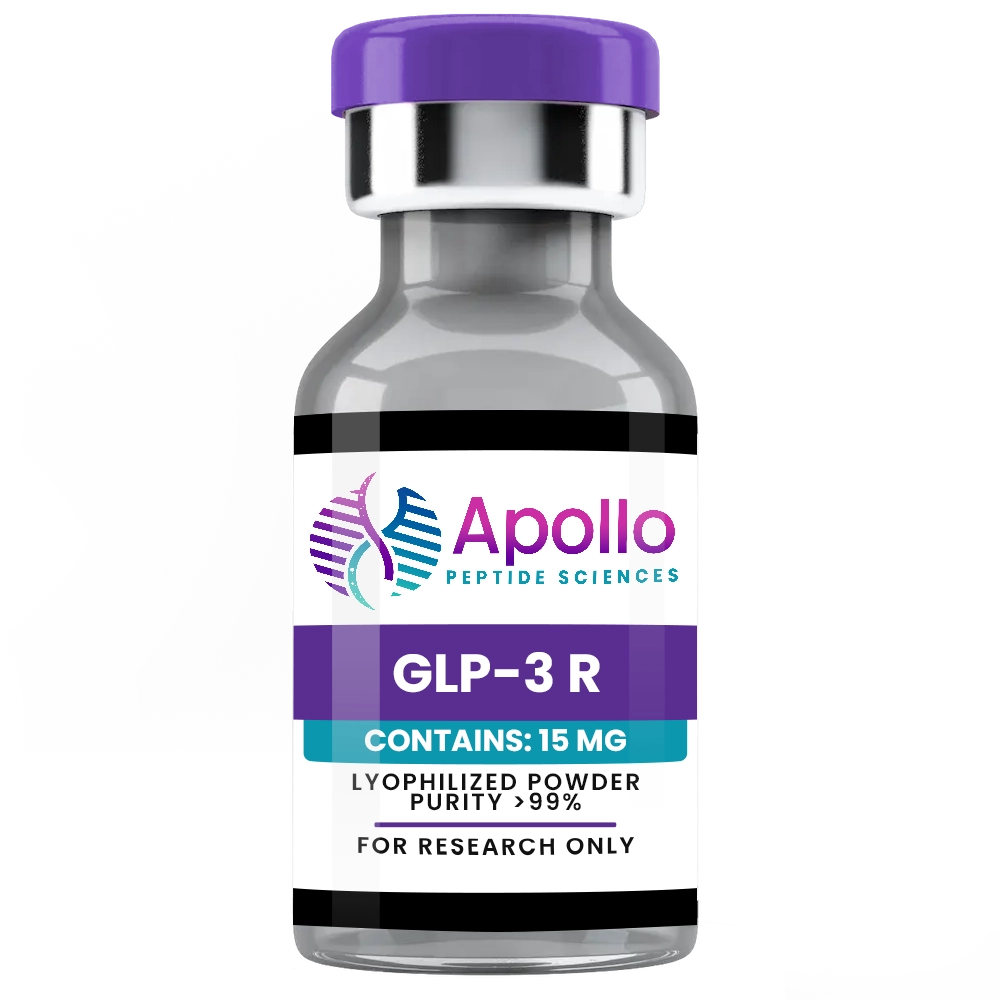
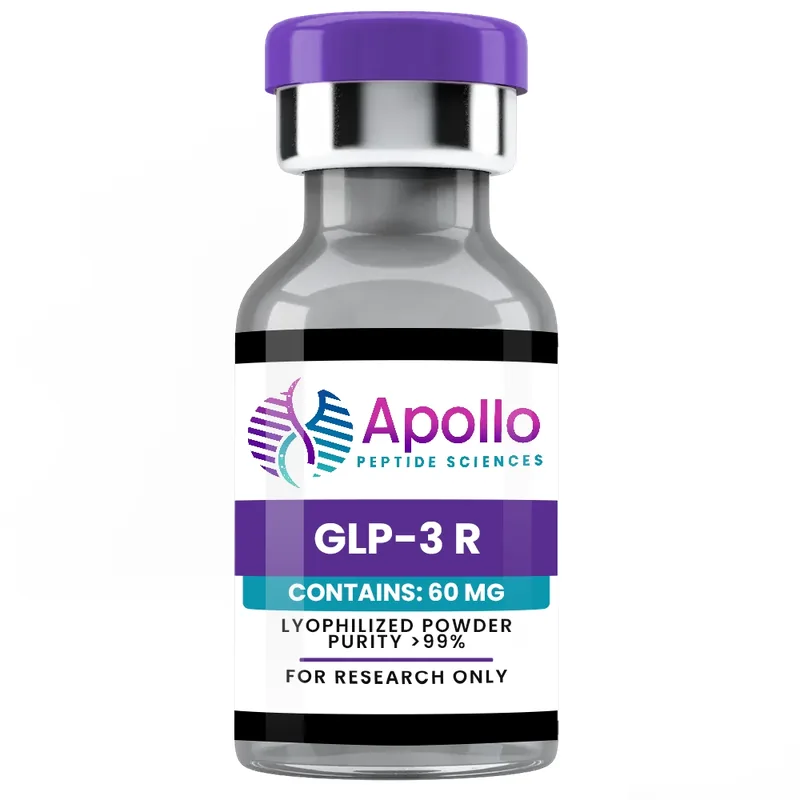
The Three Generations of GLP Research Compounds
The GLP compound landscape has evolved through three mechanistic generations:
- GLP-1 Single Agonist: Semaglutide — GLP-1R only
- GLP-1/GIP Dual Agonist: Tirzepatide — GLP-1R + GIPR
- GLP-1/GIP/Glucagon Triple Agonist: Retatrutide (GLP-3 R) — GLP-1R + GIPR + GcgR
Mechanism Comparison
| Feature | Semaglutide | Tirzepatide | Retatrutide |
| GLP-1R | Yes | Yes | Yes |
| GIPR | No | Yes | Yes |
| Glucagon R | No | No | Yes |
| Half-life | ~7 days | ~5 days | ~6 days |
| Dosing | Once weekly | Once weekly | Once weekly |
| Route | Subcutaneous | Subcutaneous | Subcutaneous |
What Each Additional Receptor Adds
GLP-1 Receptor (all three):
- Hypothalamic appetite suppression
- Slowed gastric emptying
- Glucose-dependent insulin secretion
- Cardiovascular effects (SELECT: 20% MACE reduction for semaglutide)
- Enhanced insulin sensitization
- Direct adipocyte lipid metabolism effects
- Possible additive satiety signaling
- Synergistic GLP-1 receptor potentiation
- Direct hepatic fat oxidation: Glucagon drives beta-oxidation of fatty acids in the liver — independent of appetite suppression
- Brown adipose thermogenesis: BAT activation increases energy expenditure directly
- Visceral fat mobilization: Enhanced lipolysis in metabolically harmful visceral depots
- Net effect: Fat-burning on top of appetite reduction, not just reduced fat storage
Clinical Weight Loss Data Comparison
| Compound | Trial | Duration | Mean Weight Loss |
| Semaglutide 2.4mg | STEP 1 | 68 weeks | -14.9% |
| Semaglutide 2.4mg | STEP 5 | 104 weeks | -15.2% |
| Tirzepatide 15mg | SURMOUNT-1 | 72 weeks | -20.9% |
| Retatrutide 8mg | Phase 2 | 48 weeks | -28.7% |
| Retatrutide 12mg | Phase 2 | 48 weeks | ~-26% |
Key insight: Retatrutide at 48 weeks exceeds semaglutide at 68 weeks by nearly 14 percentage points, and tirzepatide at 72 weeks by ~8 percentage points. The additional 48 weeks of semaglutide treatment produce only ~0.3% additional weight loss beyond week 68.
Head-to-Head Interpretation
Semaglutide vs. Tirzepatide
The SURPASS-CVOT trial confirms tirzepatide produces superior weight loss to semaglutide at maximal doses (~20.9% vs ~14.9%). The GIP receptor engagement adds measurable fat loss beyond GLP-1 alone.Tirzepatide vs. Retatrutide
No direct head-to-head trial exists. However, the mechanism is clear: the glucagon receptor adds hepatic fat oxidation and BAT thermogenesis that neither GLP-1 nor GIP provides. Phase 2 data places Retatrutide ~8 percentage points ahead of tirzepatide's best Phase 3 result.Why Clavicular Uses Retatrutide
The choice is mechanistic: the glucagon receptor provides a third independent fat-burning pathway that does not rely on appetite suppression. Retatrutide burns fat at the cellular level (hepatic oxidation, BAT thermogenesis) while simultaneously suppressing intake. It is the only compound in the GLP class to do all three simultaneously.Research Applications by Compound
Semaglutide: Pure GLP-1R agonist for isolated pathway studies. Best comparator for baseline GLP-1R biology.
Tirzepatide: GLP-1R + GIPR crosstalk research. Insulin sensitization and dual incretin biology.
Retatrutide: Triple receptor agonism. Hepatic fat oxidation, BAT research, glucagon receptor biology. The strongest metabolic signal in the GLP class.
All compounds available from Clavicular Stack. For laboratory research use only.