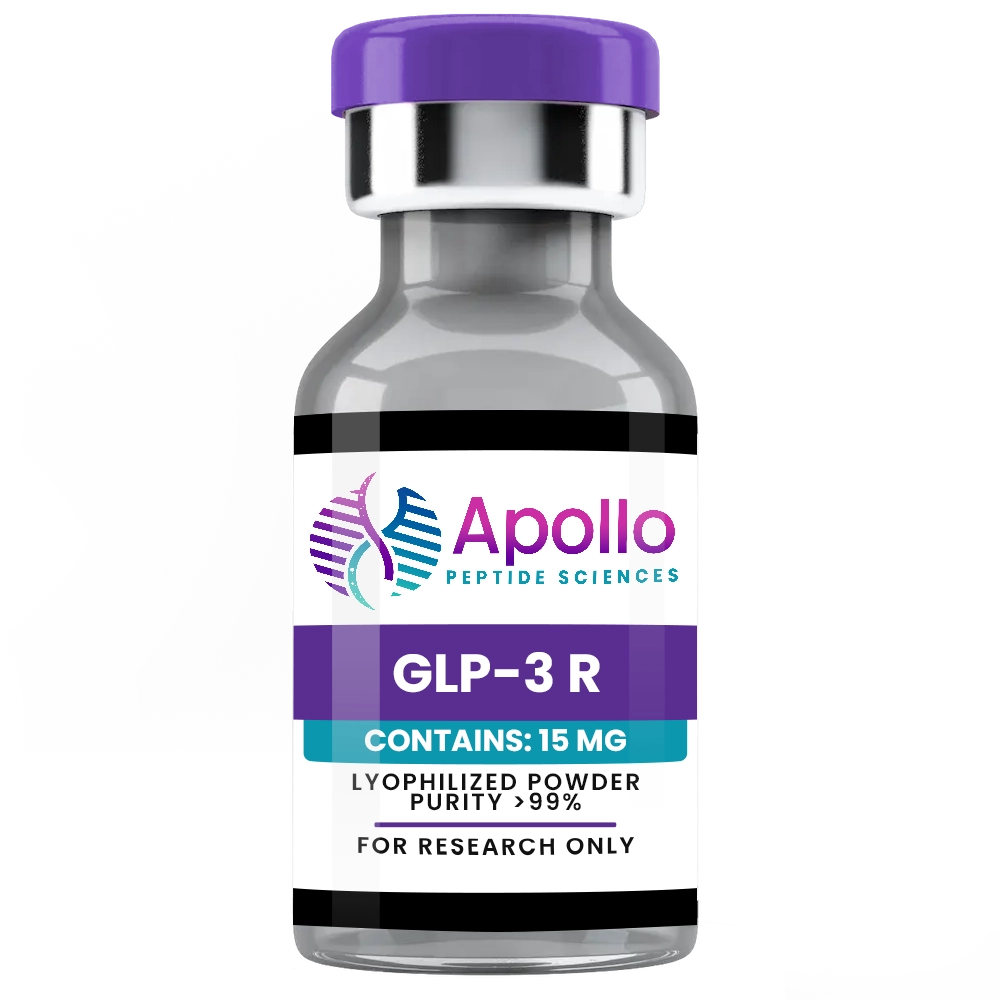
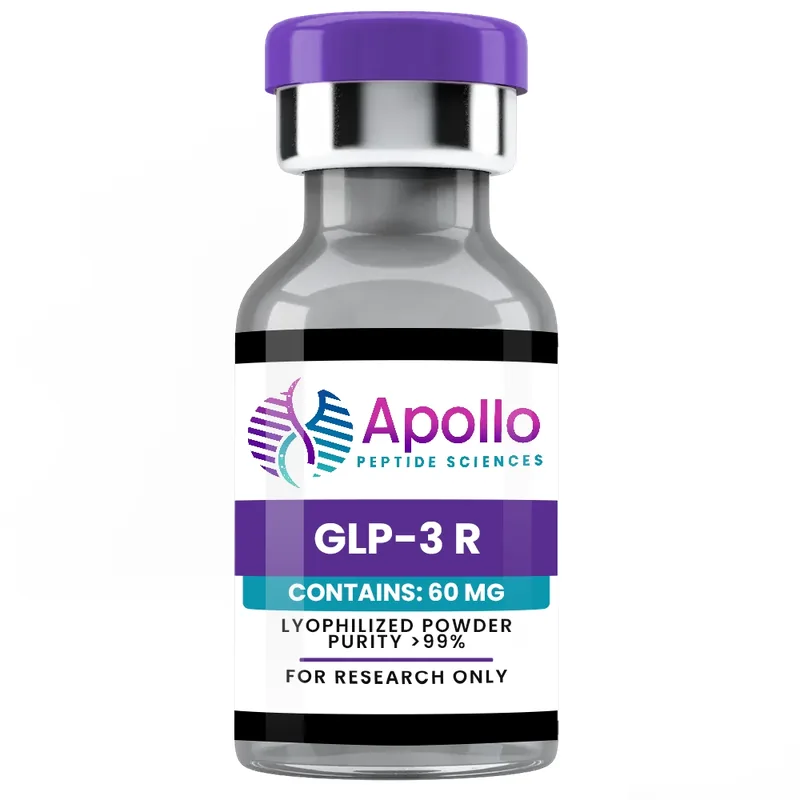
What Is Retatrutide (GLP-3 R)?
Retatrutide is a novel triple-receptor agonist peptide that simultaneously activates three metabolically critical receptors: GLP-1 (glucagon-like peptide-1), GIP (glucose-dependent insulinotropic polypeptide), and the Glucagon receptor. This triple-agonist mechanism is what distinguishes it from semaglutide (GLP-1 only) and tirzepatide (GLP-1/GIP dual).
Developed by Eli Lilly, Retatrutide entered Phase 2 clinical trials in 2023 and produced the most significant weight loss data ever observed in a GLP compound trial.
Molecular Profile
- Type: Triple GLP-1R/GIPR/GcgR agonist
- Format: Synthetic peptide, lyophilized
- Half-life: ~6 days (weekly dosing)
- Route: Subcutaneous injection
- Also known as: LY3437943, GLP-3 R
Triple-Agonist Mechanism
GLP-1 Receptor Pathway
Activates hypothalamic and brainstem GLP-1 receptors — appetite suppression, slowed gastric emptying, increased satiety. The same mechanism that makes semaglutide effective.GIP Receptor Pathway
Adds GIP receptor engagement — enhanced insulin sensitivity, direct adipocyte lipid metabolism effects, possible synergistic appetite modulation.Glucagon Receptor Pathway
The defining differentiator. Glucagon receptor activation directly drives:- Hepatic fat oxidation: Increased beta-oxidation of fatty acids in the liver
- Brown adipose tissue (BAT) thermogenesis: Direct stimulation of energy expenditure
- Visceral fat mobilization: Enhanced lipolysis in visceral adipose depots
Phase 2 Clinical Trial Data
The Phase 2 trial (NCT04881760) evaluated Retatrutide in 338 adults with obesity.
| Dose | Mean Weight Loss at 24 weeks | Mean Weight Loss at 48 weeks |
| 1mg/week | -7.9% | -10.4% |
| 4mg/week | -17.3% | -22.8% |
| 8mg/week | -22.8% | -28.7% |
| 12mg/week | -24.2% | ~-26% |
Key result: At 48 weeks, 8mg/week produced -28.7% mean body weight reduction — the largest ever observed in a Phase 2 GLP compound trial. For comparison, semaglutide 2.4mg achieves ~14.9% at 68 weeks and tirzepatide 15mg achieves ~20.9% at 72 weeks.
Research Reconstitution Protocol
For Retatrutide 15mg Vial
- Add 5mL bacteriostatic water → 3mg/mL concentration
- Each 0.5mL = 1.5mg
- For a 2mg research dose: draw 0.67mL
For Retatrutide 60mg Vial
- Add 10mL bacteriostatic water → 6mg/mL concentration
- Each 0.67mL = approximately 4mg
Storage: Lyophilized: ambient temp until use. Reconstituted: 2-8°C, use within 4-6 weeks.
Why Clavicular Uses Retatrutide
The Clavicular Stack centers on Retatrutide (GLP-3 R) over semaglutide or tirzepatide for one reason: the glucagon receptor. The triple-agonist mechanism produces stronger fat loss through three simultaneous pathways rather than one or two, with Phase 2 data 13+ percentage points ahead of semaglutide at comparable timelines.
Research Applications
- Triple-receptor agonism research: Study combined GLP-1R/GIPR/GcgR biology
- Obesity metabolic research: Advanced body composition models
- Hepatic fat metabolism: Glucagon-driven hepatic oxidation studies
- Adipose tissue biology: Brown adipose thermogenesis models
- Comparative GLP pharmacology: vs semaglutide and tirzepatide